Total Pageviews

Friday, March 25, 2022

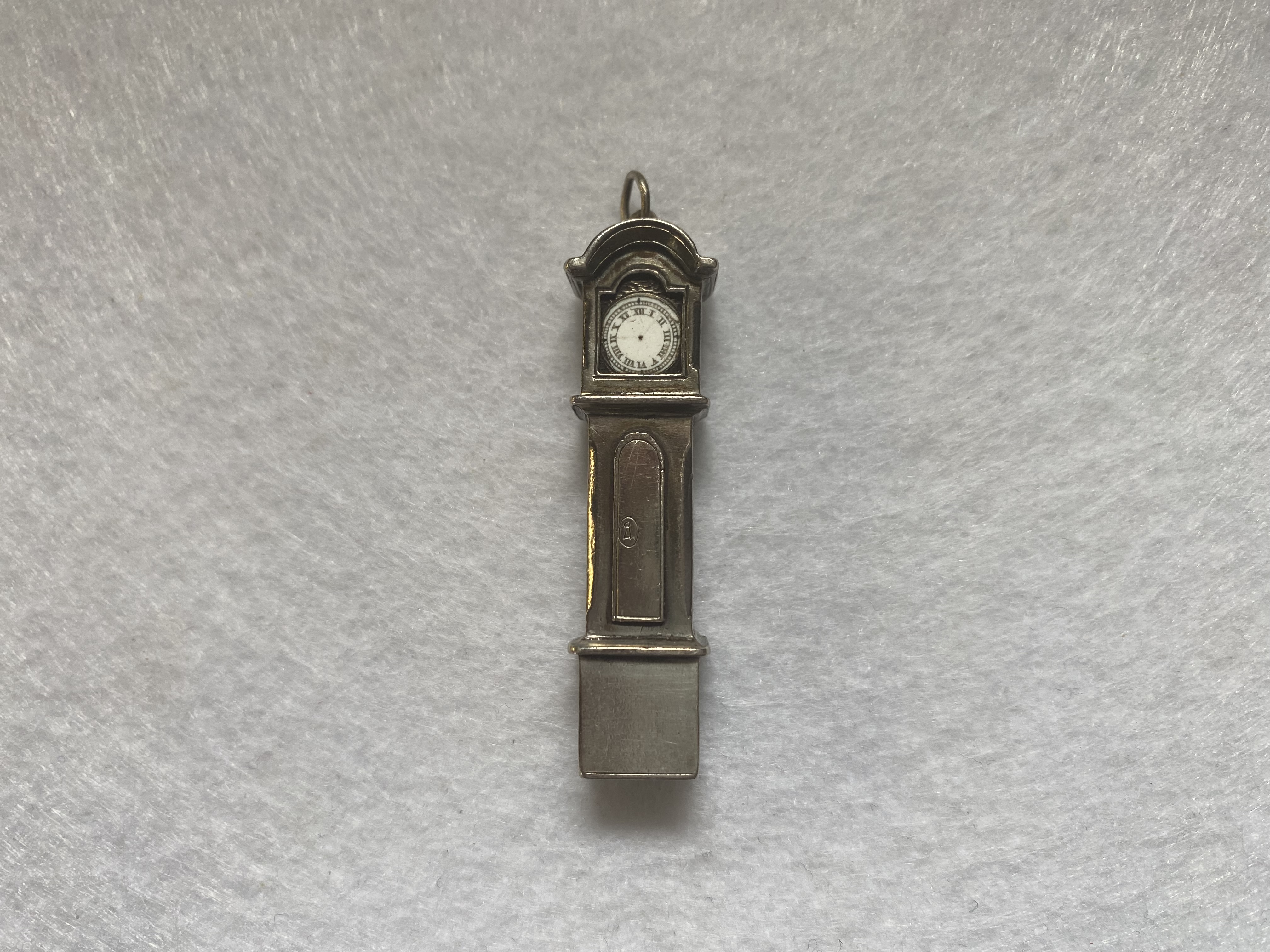
Sampson Mordan produced many figural pencils during the second half of the 19th century. Examples include elephants, tennis rackets, butter knives, and many more. I'm showing today a Mordan case clock mechanical pencil. The writing tip is deployed by the magic pencil mechanism. Pulling the top ring away from the body simultaneously pushes the writing tip out for writing. This one is circa 1880 The piece is 2 7/8 inches long closed and 3 1/4 inches extended.


Friday, March 18, 2022

I'm showing today 3 stubby German mechanical pencils. From top to bottom, they were made by Johann Faber, Kaweco, and Montblanc. The Faber and Montblanc are octagonally sided. The Kaweco is hexagonal. The Montblanc is marked with a model number 46 and features oversize diameter leads. The Faber and Kaweco take the smaller standard diameter leads of the day. All are 3 3/16 inches to 3 11/16 inches in length. The pencils were produced from the late 1920s into the early 1940s. They range in length from 3 3/16 inches to 3 11/16 inches. All 3 companies continue to be major players in the writing instrument market to this day.


Saturday, March 12, 2022

Sampson Mordan produced many cedar holder pencil models in the late 19th and early 20th centuries. Pure cedar holders hold a cedar pencil (obviously?). A ring then pushes the pencil in and out for use/carrying. Some cedar holders accept threaded end refills. Some do not. Pure cedar holders all work the same. The pencil shown here has elements of cedar holder and porte crayon. With the porte crayon, the ring moves in a channel tightening and loosening the inner diameter of the barrel. Simply, that tightening then holds the medium (lead), in place for writing. The porte crayon design goes back hundreds of years to when a hunk of graphite (the British call them wads) was stuffed into one end of the device and simply tightened down by the collar. Mine shown here features the functionality of the much earlier designed porte crayon and the newer technology of an easily replaceable wooden pencil. Remember, the wad pre-dates the wooden pencil by hundreds of years. The piece is hallmarked sterling, London, and 1898.



Friday, February 25, 2022

  Four Sampson Mordan silver mechanical pencils from the 1st quarter of the 20th century showing today. The top piece is sided. The others are rounded. Three were heavily tarnished. The cloth missed some places. 😀


Friday, February 18, 2022

Tunbridge ware is an inlay woodcraft style produced in England during the 18th and 19th centuries. Today, desktop storage boxes in this style from that time are fairly common - pencils not so much. Many months ago I showed my lone example - a four-sided Tunbridge ware pencil. All sides of this piece feature distinct mosaic patterns. Three new pencils have found their way into my stash. All are shown here. The new prize of the bunch is the rounded full inlay piece (second from the top). Pieces three and four use the Tunbridge ware inlay only on the tops of their caps. All are 3 1/2 to 4 inches in length. The time of production is the 1850 vicinity. The pencil third from the top was never sharpened.
Wikipedia elaborates on this type of inlay methodology: The decoration typically consists of a mosaic of many very small pieces of different colored woods that form a pictorial vignette. Shaped rods and slivers of wood were first carefully glued together, then cut into many thin slices of identical pictorial veneer with a fine saw. Whew!


Friday, February 11, 2022

 Three Parker Duofold flattop mechanical pencils. Circa 1920's. Great!


Saturday, February 5, 2022

   Today's posting is a silver figural mechanical pencil produced by Sampson Mordan of England. The piece possibly represents Fagin, the Dickens character. Circa 1880 - 1890. The material is silver. The writing section pulls out telescopically from the base. Without the ring assembly, the piece measures 1 3/8 inches long in the closed position and 2 1/2 inches in length extended.